Piling on: Scientology's RTC adds to appeal in Leah Remini lawsuit

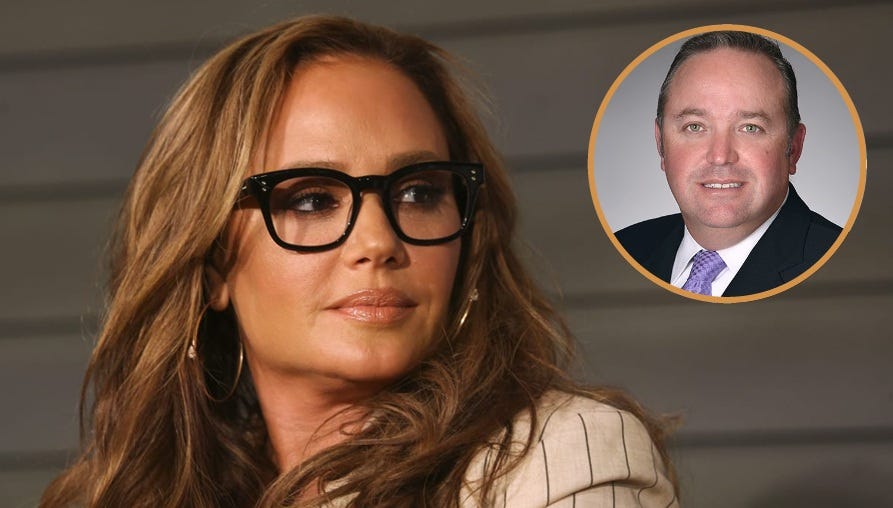
We were there. We saw it happen. We were in the courtroom for a hearing in Leah Remini’s lawsuit a year ago when Scientology’s nominally controlling entity, the Religious Technology Center, objected to being a part of the case.
What followed was the classic Scientology legal gambit. Years ago, Denise Brennan told us, all of this was anticipated when L. Ron Hubbard in the early 1980s had Scientology reorganized into dozens of nested entities, an alphabet soup with names like CSI, RTC, ASI, CST, etc.
It was hard to keep track of who was in charge, and that was the point. Those who worked for him will tell you that there’s no question who’s running things: David Miscavige is a ruthless micro-manager who obsesses over every detail, especially in retaliation operations against former members. And he does it as the “chairman of the board” of the Religious Technology Center.
But when Scientology is challenged legally, it whines and cries in court that David Miscavige is only the “ecclesiastical” leader of Scientology, that RTC is only about maintaining the “purity” of the tech, and that it would never get its hands dirty with something as sordid as a smear campaign against someone like Leah Remini.
And in that courtroom in January 2024, we watched as RTC’s attorneys argued to Judge Randolph Hammock that RTC had no business being sued by Leah and should be let out of the lawsuit because Leah herself had alleged nothing specific about RTC in her complaint.
Judge Hammock then did something pretty remarkable. He paused things long enough for Leah to add those allegations, in the form of declarations from two people who knew all about RTC, Miscavige, and how things actually work in Scientology: Mike Rinder and Claire Headley. Judge Hammock was very clear about this at the time: At this early stage in the lawsuit, that was all that Leah needed to do to keep RTC in the lawsuit, was allege that Miscavige and RTC really run these kinds of smear campaigns. She’d have to prove it to a greater extent later, but for now, this early in the lawsuit, those declarations by Mike and Claire were enough.
Well, RTC was hopping mad about that then, and they’re still hopping mad about it now. On Thursday, we showed you the appeal brief submitted by the Church of Scientology International that is attempting to overturn Judge Hammock’s preliminary ruling in the lawsuit. But RTC has filed its own brief, still carping about those declarations from Mike and Claire. And yes, they point out multiple times that Mike won’t be able to follow up his declaration with testimony because he has since died.
That may be the case, but we hope the court understands that Leah can bring numerous other people to court who can testify about the way RTC really works.
So for now, have at it, and let us know what stands out for you in this “joinder” written by RTC attorney Matthew Hinks.
RELIGIOUS TECHNOLOGY CENTER’S OPENING BRIEF
INTRODUCTION
At the heart of the anti-SLAPP law lies a simple principle: if a plaintiff brings a case targeting free speech or petition rights, they must back it up with admissible evidence that shows their claim has merit. The anti-SLAPP law protects these rights, cutting off baseless claims early and sparing defendants unnecessary litigation costs. Without at least a showing of “minimal merit” supported by evidence that could reasonably be admitted at trial, allegations attacking protected speech and petition are properly struck.
This is the quintessential anti-SLAPP case. It was filed by a former television actress who alleges she was the “public face of Scientology” until her very public split with the religion. Since then, Remini has made a career of attacking Scientology and its leadership through a best-selling book, a cable television show, podcasts, and social media. She filed this lawsuit when the Church of Scientology International (“CSI”) understandably fought back, exposing Remini’s hypocrisy, lies, and hate speech through its own public communications.
But Remini did not sue only CSI. She also sued Religious Technology Center (“RTC”), a separate Scientology church, and David Miscavige, the Chairman of RTC’s board and ecclesiastical leader of Scientology. Her claims focus on statements made in social media posts, websites, and other communications tied to her public feud with her former religion. But when opposing RTC’s anti-SLAPP motion, Remini did not provide admissible evidence that RTC participated in the publication of the statements she complains about. Instead, she relied on declarations from two former Scientologists who left Scientology over a decade before the events alleged in Remini’s complaint and who speculated that RTC “must have” been involved because it allegedly engaged in similar conduct in the past. The trial court accepted this speculative and inadmissible “propensity” evidence under a misreading of the California Supreme Court’s decision in Sweetwater Union High School District v. Gilbane Building Co., 6 Cal. 5th 931 (2019), and denied RTC’s motion as to several allegations in the complaint.
RTC shows below that it was error for the trial court to admit Remini’s evidence. RTC also shows that, with or without the improper evidence, Remini did not meet her burden against RTC because nothing in the record establishes—even under the “minimal merit” standard—that RTC participated in the conduct described in Remini’s complaint. This Court should therefore strike from Remini’s complaint all of the allegations as against RTC that arise from protected conduct.
FACTUAL BACKGROUND
A. The parties: Religious Technology Center, Church of Scientology International, and Leah Remini.
RTC is a church of the Scientology religion. It is a 501(c)(3) nonprofit religious corporation, recognized by the Internal Revenue Service as a church within the meaning of 26 U.S.C. § 170(b). RTC’s central role and function is to ensure the worldwide orthodoxy of the Scientology religion.
CSI is also a 501(c)(3) nonprofit religious corporation. It is incorporated in the State of California and is Scientology’s “Mother Church.” CSI is committed and dedicated to the advancement and dissemination of the Scientology religion through the Scientology churches that are under its ecclesiastical direction.
Remini describes herself in her complaint as a “two-time Emmy-award winning producer, actress and New York Times bestselling author ....” She alleges that she was a Scientologist for nearly 40 years, but split with Scientology in 2013 and since that time has devoted her career to attacking her former religion.
B. Remini alleges in the FAC a series of claims arising out of her public dispute with Scientology, but her allegations do not differentiate between defendants.
Remini filed this lawsuit on August 2, 2023, and filed an amended complaint on August 29, 2023. In its Opening Brief, CSI describes the events leading to Remini filing her lawsuit—from her life as a Scientologist, to her rise to Hollywood fame, her public split with Scientology, and to the very public war of words upon which she sues. Since RTC is joining in CSI’s brief, RTC refers to those portions of CSI’s brief for context only. CSI also describes the nature of Remini’s allegations, the great majority of which implicate constitutionally protected speech, debate, and boycott, leading to CSI and RTC’s anti-SLAPP motion.
Remini’s operative complaint alleges claims for harassment, stalking, infliction of emotional distress, interference with contract and prospective economic advantage, and defamation. She sues three defendants—RTC, CSI, and David Miscavige, RTC’s board Chairman—but often does not distinguish between them in her complaint. She alleges that RTC “is the principal management, security, and enforcement entity for Scientology,” that it owns and enforces Scientology IP rights, that its officers “oversee and direct the management of each of the other Defendants,” and that RTC, along with Mr. Miscavige, “direct[s] Defendants’ investigative and policing operations, monitor[s] members’ behavior, and handle[s] matters concerning discipline and punishment” of Scientologists. Remini does not allege that RTC engaged in any specific wrongdoing against her; instead, she lumps all of her charging allegations together and alleges them generally against the “Defendants.”
C. CSI and RTC jointly move to specially strike portions of the complaint under Code of Civil Procedure section 425.16; Remini opposes but offers no evidence of RTC’s alleged liability.
CSI and RTC jointly moved under Code of Civil Procedure § 425.16 to specially strike portions of Remini’s complaint. Given the length of her complaint and number of allegations of protected speech and conduct, the motion sought to strike 70 paragraphs and a portion of another, a paragraph of the Prayer for Relief, four footnotes, 10 images within paragraphs, and six causes of action.
Remini filed opposition papers on December 1, 2023, including a brief and three declarations. Much like her complaint, Remini’s evidence did not differentiate between defendants and offered no proof that RTC specifically was responsible for the various social media posts, tweets, and other communications she complained about.
One declaration was from a former Scientologist named Mike Rinder. His declaration did not address Remini’s allegations at all and did not mention RTC. Remini’s declaration laid out her allegations, but they are directed only against the “Defendants” generally. Like Rinder’s, Remini’s declaration does not refer to RTC or even use the words “Religious Technology Center” or “RTC.” The declaration from Remini’s counsel attaches the various blog posts, articles, and tweets on which Remini sues, but offers no suggestion that RTC is the source of the communications or directed their publication.
CSI and RTC filed joint reply papers on December 22, 2023. They pointed out, under the heading, “Statements Not Made by Defendants,” that Remini could not carry her burden under prong two of the anti-SLAPP analysis for many of her allegations because she had no evidence that defendants were the source of the statements she sued on. Specifically relevant to this appeal, they argued that Remini “provides no evidence that defendant RTC made or was the source of any of alleged defamatory statements in the” complaint. CSI did not contest that it was the source of many statements Remini alleged in the complaint.
D. The trial court holds three hearings on the anti-SLAPP motion.
1. The trial court maintains that any evidence that may ultimately be admissible at trial, including statements that are “triple hearsay without foundation” are admissible on an anti-SLAPP motion under Sweetwater Union High School District. v. Gilbane Building Co., 6 Cal. 5th 931 (2019).
The trial court issued a tentative ruling on the anti-SLAPP motion on January 12, 2024, and held the first hearing on the motion on January 16, 2024. Much of the argument concerned the trial court’s interpretation of Sweetwater Union High School District v. Gilbane Building Co., 6 Cal. 5th 931 (2019) (hereinafter, “Sweetwater”) and the court’s views on the admissibility of evidence on an anti-SLAPP motion.
Discussing Sweetwater, the trial court judge referred to Division One’s opinion in Sanchez v. Bezos, 80 Cal. App. 5th 750 (2022) (Bendix, J.; hereinafter, “Bezos”), which addressed and applied Sweetwater, and said, “I don’t accept it. I reject it with extreme prejudice. She’s [Justice Bendix] wrong. All right. And I get to choose which decision I follow, all right, under Auto Equity.” [2. The trial court was at this point under the mistaken beliefs that both Sweetwater and Bezos were opinions of the courts of appeal, that the Bezos court had disagreed with and declined to apply Sweetwater, and that the trial court thus had discretion under Auto Equity Sales, Inc. v. Superior Court, 57 Cal. 2d 450 (1962) to choose between conflicting court of appeal decisions. (See RT, 1/16/24, pp. 22–23 [“So I’m aware of that case [Bezos v. Sanchez]. I’m aware that it criticizes Sweetwater. It says Sweetwater is wrong. I get to choose under Auto Equity because this is one court of appeals versus another court of appeal. Same district, too, if I can remember. But it doesn’t matter. And under Auto Equity, I feel that that decision was incorrect and that Sweetwater, the original decision is what I’m following.”].)]
He continued:
My understanding of Sweetwater says, okay, so am I supposed to find the person that was there, you know, blah, blah, and get all these declarations that have firsthand knowledge of it? No, that’s not fair because of the brevity of what we’re doing and the – we’re doing it in a very summary situation. As long as, inevitably, it could be admitted, you could find the person and it could appear in court, that’s all that’s required. And that makes sense to me, given the time limits involved.
Further, according to the trial court, even hearsay evidence presented by a witness without personal knowledge is admissible on an anti-SLAPP motion so long as the evidence could be admitted at trial:
Mr. Forman: And I think here we have rank hearsay from a witness –
The Court: We do.
Mr. Forman: – who will never be competent to testify to these issues.
The Court: I tell you what, there’s triple hearsay. I mean all your objections were well thought out. But under Sweetwater, my interpretation of it, that inevitably they could correct the hearsay problems or the foundational problems. All right. That’s what I believe. And on Sweetwater, I’m bound to overrule the objection. But the malice is something, when I use the minimal merit standard and accept everything that she’s put into evidence as true, under Sweetwater, which could be triple hearsay without foundation, I think that minimal – that I cannot SLAPP anything based upon lack of actual malice.
(see also RT, 2/6/24, p. 449 [“even though it’s hearsay and all this other stuff, I accept it all. It comes in under Sweetwater ...”], pp. 461–62 [“Wait a minute. This is all triple hearsay from the newspaper, whatever. Again, my interpretation of Sweetwater allowed me to consider that and to accept it as being true.”].)
Counsel for RTC addressed Remini’s lack of evidence that RTC made any of the alleged statements she sued upon: “there is no evidence that RTC was behind any of these statements” and “the word ‘RTC’ does not appear in their papers.” After some limited questioning of Remini’s counsel, the trial court continued the hearing.
2. The trial court gives Remini leave to file evidence of RTC’s alleged responsibility and RTC responds.
At the continued hearing on January 19, 2024, the trial court took up the issue of the evidence against RTC. Remini’s counsel argued that Remini’s evidence against RTC satisfied the minimal merit standard. Alternatively, she requested an opportunity to submit additional evidence. The trial court questioned counsel for RTC about whether it should continue the hearing “to allow [Remini] to file a supplemental declaration by that gentleman [Rinder] or any other evidence purely on the narrow issue of RTC and how they can be linked to these things ....” After hearing from RTC’s counsel, the trial court continued the hearing to allow Remini to file supplemental evidence to support her claims against RTC. The court also allowed RTC to file a brief and counter evidence.
Remini filed two supplemental declarations directed against RTC on January 23, 2024.
One was a supplemental declaration from Rinder who testified that he was a senior official of CSI until 2007. According to Rinder, based on his experience, “the social media attacks and other assaults against Leah Remini are precisely the type of actions that RTC directs” through its board Chairman. [3. Rinder died after submitting this declaration and cannot testify at trial. (See Mike Rinder, ‘Leah Remini: Scientology and the Aftermath’ Co-Host, Dies at 69, Variety (Jan. 5, 2025)] The other declaration was from Claire Headley who says that she worked for RTC and its Chairman from 1996 to 2004. Like Rinder, Headley claimed that, during her time with RTC, RTC, through its Chairman, was responsible for the “supervision of campaigns intended to silence, muzzle, and destroy anyone who violates Scientology’s policies ....” Since they had both left Scientology years earlier, neither declarant could offer evidence that RTC had directed the specific statements or events alleged in Remini’s complaint. Headley’s declaration did not even refer to Remini.
RTC filed a further brief responding to the new declarations, along with two new declarations of its own and evidentiary objections, on January 30, 2024. RTC’s evidence showed it to be a corporation separate from CSI with its own independent role within Scientology as the final arbiter of religious orthodoxy. As a separate entity, RTC has its own directors, officers, facilities, and functions; maintains its own corporate books; has its own bank accounts; and manages its own finances.
RTC also presented evidence that it had no role in the events alleged in Remini’s complaint and neither made nor published any of the statements alleged in the complaint. RTC showed that it posted no videos and created no websites discussing Remini anywhere, and, in particular neither maintains the websites nor posted any videos or content to the websites referenced in Remini’s complaint. RTC also showed that it does not post on social media.
RTC also offered evidence that it undertook no act that the trial court had tentatively found to be protected under the first prong of the anti-SLAPP analysis. RTC offered evidence that:
— It does not post on social media or control any Twitter accounts;
— It did not create or publish any of the content on the websites identified in Remini’s complaint;
— It does not maintain or control any social media account that has ever posted about Leah Remini, including posts about Remini’s daughter; posts with images of Remini that relate to People Puzzler, Game Show Network, iHeartMedia, AudioBoom, Vice News or ID/PR; or posts about advertisers or companies that are connected with Remini and her shows or platforms;
— None of the Twitter accounts named in Remini’s complaint are controlled by RTC;
— It has never photoshopped any image of Remini;
— It has never tweeted or issued a statement alleging that (1) Remini incited incidents of threats and violence, or inspiring hate crimes; (2) Remini is a bigot, or that she has inspired praise of Hitler; (3) Remini inspired the murder of a Scientologist in Australia; or (4) Remini has “blood on her hands”;
— It did not create the Interfaith Alliance;
— It did not send letters or other communications to persons affiliated with iHeartMedia, AudioBoom, Game Show Network, or Vice News, or any of the third parties referred to in the complaint;
— It did not tweet, post, write or send any direct or indirect communications to the advertisers, investors, employees, or executives of iHeartMedia, AudioBoom, or Game Show Network;
— It did not publish or tweet any statements about or photos of Kelly Novak or her firm ID/PR, or tag or cause to be tagged any Twitter accounts of ID/PR’s clients;
— It did not organize the alleged meeting of Scientology celebrities or other Scientologists between April and May 2018;
— It did not call or email persons affiliated with iHeartRadio; and
— It did not create, publish, or direct the publication of any letters or communications to persons affiliated with AudioBoom, Babbel, PrettyLitter, or CandyCapital.
E. After a third hearing, the trial court issues its final order granting the anti-SLAPP motion in part and overruling all of RTC’s objections to evidence.
The supplemental Rinder and Headley declarations were a subject of the continued hearing on the anti-SLAPP motion on February 6, 2024. RTC’s counsel pointed out that there is “no foundation” for the evidence Remini relies on, which is all “hearsay statements” and “speculation,” and argued that Remini must provide evidence that is “admissible at trial.” The trial court responded: “that was before Sweetwater... That’s important. That’s critical to my decision.”
Counsel for CSI addressed Sweetwater and Bezos again. He pointed out that Sweetwater was a California Supreme Court opinion, that the Bezos opinion was an interpretation of Sweetwater, and that Bezos is binding on the trial court. The trial court judge said that he would review Bezos and consider it.
The trial court issued its final ruling granting the anti-SLAPP motion in part and denying it in part on March 12, 2024. In a footnote, the trial court addressed Sweetwater and Bezos:
As raised by Defendants at the hearings, this court is aware that the Court of Appeal in Sanchez v. Bezos (2022) 80 Cal. App. 5th 750, 759, adopted a narrow reading of Sweetwater. There, the Court of Appeal rejected the proposition that nearly any hearsay evidence may be considered on a special motion to strike if that hearsay can be “cured” by the time of trial. Instead, the Court held that Sweetwater only “supports the proposition that out-of-court statements made under oath or penalty of perjury, such as in an affidavit, declaration, or transcript of prior court testimony taken under oath, may be considered for anti-SLAPP purposes, despite being hearsay.” The opinion seems to suggest that hearsay going beyond that—such as double (or triple) hearsay that appears in a declaration or affidavit—is inadmissible at the anti-SLAPP stage.
In some sense, this seems to conflict with the accepted principle that a plaintiff enjoys “a degree of leeway in establishing a probability of prevailing on its claims due to the early stage at which the [anti-SLAPP] motion is brought and heard [citation] and the limited opportunity to conduct discovery [citation].” (Integrated Healthcare Holdings, Inc. v. Fitzgibbons (2006) 140 Cal. App. 4th 515, 530.) But being a published appellate decision, Sanchez is binding on this court. However, when considering Sanchez and Sweetwater together, the court finds that the material evidence offered by Plaintiff here conforms with the standards set forth in those cases and is therefore admissible at this stage. To the extent evidence in the declarations might not, that evidence is not material to the outcome of this motion, and therefore unnecessary to weigh and consider. In other words, neither Sanchez nor the rules governing hearsay bar evidence relevant to this motion.
The trial court did not identify what evidence it believed was and was not “material” to the motion. Nor did the trial court identify what evidence “might not” be admissible. Citing only Sweetwater, the trial court overruled all parties’ objections to the others’ evidence, including all of RTC’s objections to the supplemental declaration of Mike Rinder and the declaration of Claire Headley.
STATEMENT OF APPEALABILITY
The trial court’s March 12, 2024, order granting in part and denying in part RTC’s anti-SLAPP motion is appealable under Code of Civil Procedure sections 904.1(a)(13) and 425.16(i).
STANDARD OF REVIEW
The superior court’s ruling on the anti-SLAPP motion, including its determination of whether the complainant has established a reasonable probability of prevailing on the merits, is reviewed de novo. Gilbert v. Sykes, 147 Cal. App. 4th 13, 22 (2007).
Additionally, although courts of appeal normally review evidentiary rulings for an abuse of discretion, where the evidentiary ruling turns on a legal question, the ruling presents a question of law subject to de novo review. Winslett v. 1811 27th Avenue, LLC, 26 Cal. App. 5th 239, 247 (2018); see also Pipitone v. Williams, 244 Cal. App. 4th 1437, 1451 (2016) (“Because the rulings were determined on the papers and based on questions of law such as hearsay, we find that de novo review is proper in this context”); Condon-Johnson & Associates, Inc. v. Sacramento Mun. Util. Dist., 149 Cal. App. 4th 1384, 1392 (2007) (“when the issue is one of law, we exercise de novo review”).
That principle requires de novo review of the trial court’s evidentiary rulings in this case because the rulings turned on the court’s interpretation of Sweetwater and the interpretation of the language of a judicial opinion is a legal determination reviewed de novo. In re Groundwater Cases, 154 Cal. App. 4th 659, 674 (2007). This conclusion is all the more true because an evidentiary ruling that rests on an error of law is an abuse of discretion. Kouronian v. Cal. Dep’t of Tax & Fee Admin., 91 Cal. App. 5th 1100, 1112 (2003).
LEGAL ARGUMENT
A. Remini failed to carry her burden under the second prong of the anti-SLAPP analysis as to RTC because the supplemental Rinder and Headley declarations were inadmissible to prove RTC’s involvement in the acts she complains of.
1. Under the anti-SLAPP statute, it was Remini’s burden in the trial court to proffer evidence that RTC is responsible for the acts alleged in her complaint.
RTC moved jointly with CSI to strike many allegations of Remini’s complaint under California’s anti-SLAPP statute. The California legislature enacted that statute to protect parties from lawsuits brought to chill the valid exercise of the constitutional rights of speech, petition, and boycott. Sipple v. Found. for Nat’l Progress, 71 Cal. App. 4th 226, 235 (1999). The anti-SLAPP statute is intended to ensure that such retaliatory lawsuits end “early and without great cost to the SLAPP target.” Varian Med. Sys., Inc. v. Delfino, 35 Cal. 4th 180, 192 (2005). Code of Civil Procedure section 425.16 thus “unambiguously” requires that a trial court strike “any ‘cause of action against a person arising from any act of that person in furtherance of the person’s right of petition or free speech under the United States or California Constitution in connection with a public issue’ as to which the plaintiff has not ‘established that there is a probability that [he or she] will prevail on the claim.’” Equilon Enters. v. Consumer Cause, Inc., 29 Cal. 4th 53, 58 (2002).
As the moving party, RTC had only one burden on the motion: to show under the first prong of the anti-SLAPP analysis that Remini’s lawsuit “arises from” the exercise of free speech or petition rights as defined in Code of Civil Procedure section 425.16(e). Equilon Enters., 29 Cal. 4th at 61; Governor Gray Davis Comm. v. Am. Taxpayers All., 102 Cal. App. 4th 449, 458–59 (2002). In the first prong of the anti-SLAPP analysis, the merits of the plaintiff’s claim play no role. City of Costa Mesa v. D’Alessio Invs., LLC, 214 Cal. App. 4th 358, 371 (2013). Instead, RTC’s burden was limited to establishing only whether section 425.16’s procedural protection applies. Id. RTC specifically did not have to disprove the substantive merits of Remini’s claims against it. Navellier v. Sletten, 29 Cal. 4th 82, 88, 94–95 (2002); Equilon Enters., 29 Cal. 4th at 61.
The trial court found that Remini’s allegations against RTC in 69 paragraphs of her complaint arose from the exercise of speech, petition, and boycott rights. At that point, the burden shifted to Remini to demonstrate a probability of prevailing on each element of her claims arising from those paragraphs. Cal. Civ. Proc. Code § 425.16(b)(1); Navellier v. Sletten, 106 Cal. App. 4th 763, 768, 775 (2003) (striking breach of contract claim for lack of evidence of damages).
To satisfy her burden, Remini had to show that her claims are both legally sufficient and supported by a prima facie showing of facts sufficient to support a favorable judgment. Taus v. Loftus, 40 Cal. 4th 683, 715 (2007). This is a “summary judgment-like procedure.” Varian Med. Sys., 35 Cal. 4th at 192. Though the court does not weigh the evidence, courts consider the defendant’s evidence with a view toward whether it defeats plaintiff’s showing as a matter of law, such as by establishing a defense or the absence of a necessary element. 1-800 Contacts, Inc. v. Steinberg, 107 Cal. App. 4th 568, 585 (2003); Wilson v. Parker, Covert & Chidester, 28 Cal. 4th 811, 821 (2002). And the plaintiff’s evidence must be substantial enough that “a trier of fact could find in [plaintiff’s] favor, as to every element [she] need[s] to prove at trial....” Lee v. Kim, 41 Cal. App. 5th 705, 720 (2019) (emphasis in original). An anti-SLAPP motion must be granted if the plaintiff fails to produce evidence to support his or her claim, or if the defendant shows plaintiff cannot prevail as matter of law. Siam v. Kizilbash, 130 Cal. App. 4th 1563, 1570 (2005).
2. To satisfy her burden, Remini had to proffer evidence that would be admissible at trial.
An anti-SLAPP motion is an evidentiary motion. Finton Const., Inc. v. Bidna & Keys, APLC, 238 Cal. App. 4th 200, 213 (2015). For that reason, a plaintiff may not oppose based only on the allegations of its complaint. Id. Instead, the plaintiff’s proof “must be made upon competent admissible evidence.” Sweetwater, 6 Cal. 5th at 940.
An assessment of the probability of prevailing under the second prong of the anti-SLAPP analysis looks to trial, and the evidence that would be admissible to create triable factual issues at that time. San Diegans for Open Gov’t v. San Diego State Univ. Rsch. Found., 13 Cal. App. 5th 76, 109 (2017). Evidence that is lacking foundation, speculative, hearsay, or inadmissible at trial for any other reason, may not be considered on an anti-SLAPP motion. Tuchscher Dev. Enters., Inc. v. San Diego Unified Port Dist., 106 Cal. App. 4th 1219, 1237 (2003).
Courts thus routinely strike the pleadings of plaintiffs who fail to support their claims with admissible evidence:
— In Bezos, the court affirmed the dismissal of a defamation action because the only evidence plaintiff had that defendants made the allegedly defamatory statement was hearsay and could never be admitted at trial. 80 Cal. App. 5th at 764.
— In San Diegans for Open Government, the court affirmed the dismissal of plaintiff’s statutory claims because its evidence lacked personal knowledge, was hearsay, and did not establish an exception to the hearsay rule. 13 Cal. App. 5th at 109.
— In Dwight R. v. Christy B., 212 Cal. App. 4th 697, 714–15 (2013), the court affirmed an order striking Section 1983 claims because plaintiff’s evidence of conspiracy and joint action was speculative.
— In Tuchscher Development, the court affirmed the dismissal of interference and other claims because plaintiff’s evidence lacked foundation and was speculative and hearsay. 106 Cal. App. 4th at 1238–39.
— And in Evans v. Unkow, 38 Cal. App. 4th 1490, 1498 (1995), the court affirmed the dismissal of a defamation action because defendant’s declaration did not show he had personal knowledge of facts establishing malice.
The Supreme Court clarified the admissibility at trial test in Sweetwater when it permitted the use of factual narratives subscribed under the penalty of perjury and grand jury testimony given under oath. 6 Cal. 5th at 947–49. The Court explained that “evidence may be considered at the anti-SLAPP motion stage if it is reasonably possible the evidence set out in supporting affidavits, declarations or their equivalent will be admissible at trial.” Id. at 947. Sweetwater distinguished between “evidence that may be admissible at trial and evidence that could never be admitted.” Id. at 948 (emphases in original). The former may be admissible on an anti-SLAPP motion, but the latter may not. The sworn testimony in Sweetwater could be considered because no categorical rule barred its admission and it is not unreasonable to expect that those witnesses may be deposed and/or produced for trial. Id. at 949. On the other hand, evidence that is “incompetent for lack of personal knowledge” may not be admitted because it “suffers from ‘the sort of evidentiary problem a plaintiff will be incapable of curing by the time of trial.’” Id. at 948.
The Sweetwater Court cited with approval the opinion in Fashion 21 v. Coalition for Humane Immigrant Rights of Los Angeles, 117 Cal. App. 4th 1138, 1147 (2004). The Fashion 21 court found that a videotape lacking authentication could be admitted on an anti-SLAPP motion because “evidence that is made inadmissible only because the plaintiff failed to satisfy a precondition to its admissibility could support a judgment for the plaintiff assuming the precondition could be satisfied” and, generally, “authentication problems tend to be among the easiest evidentiary dilemmas to overcome once they are called to the party’s attention.” Id. at 1148. Like Sweetwater, the Fashion 21 court emphasized that evidence that would be barred at trial by the hearsay rule, or evidence that is “speculative,” “not based on personal knowledge,” or is “impermissible opinion testimony” may not be admitted “because it could never be introduced at trial.” Id. at 1147–48.
Bezos examined Sweetwater in detail and provides an example of a case alluded to by the Supreme Court involving evidence that could never be admitted at trial. 80 Cal. App. 5th at 758. Plaintiff had been accused by defendants of leaking photographs as part of a conspiracy. Id. He sued the defendants for defamation after a reporter allegedly told him of defendants’ accusations. Id. In opposition to an anti-SLAPP motion, he filed only his own declaration recounting the reporter’s alleged statement to him. Id.
The court of appeal affirmed the trial court’s order striking the complaint because plaintiff’s statement about what the reporter allegedly told him was hearsay. Id. at 765. As the court observed, Sweetwater affirmed that the hearsay rule is a substantive rule barring admission and cited to Fashion 21, listing hearsay as “evidence that cannot be used by the plaintiff to establish a probability of success on the merits because it could never be introduced at trial.” Id. at 774 (internal quotations omitted) (emphasis in original).
The court rejected plaintiff’s argument that it was reasonably possible the evidence in his declaration could be admitted at trial because the reporter could testify. Id. at 774–75. Plaintiff argued that, under Sweetwater, it is not the declaration itself that must be admissible at trial, but that the facts asserted in the declaration can be established through admissible evidence. Id. at 775. The court of appeal disagreed explaining that “Sweetwater’s only examples of curable hearsay were plea forms and grand jury transcripts,” which could be considered because the statements were given under oath by competent witnesses and thus “there is sufficient reason to conclude, for anti-SLAPP purposes, that admissible evidence of those events exists, either through the testimony of the attesting witnesses or that of other competent witnesses involved in the events.” Id. at 775–76. In contrast, the plaintiff in Bezos would never be competent to testify about the reporter’s out-of-court statement. Id.
3. The Rinder and Headley declarations are inadmissible to prove that RTC is responsible for the acts alleged in the Prong 1 Qualified Paragraphs.
After Remini failed in her initial opposition to the anti-SLAPP motion to proffer evidence of RTC’s alleged involvement in the events alleged in her complaint, the trial court gave her leave to supplement her evidence. Remini responded by filing the supplemental declaration of Mike Rinder and the declaration of Claire Headley. When it ruled that RTC could be held liable for the conduct alleged in Remini’s complaint, the trial court relied solely on those declarations.
But those declarations focus entirely on RTC’s alleged similar conduct in the past and are therefore inadmissible propensity evidence.
A “trial centers on a specific incident, not the defendant’s general behavior.” Bowen v. Ryan, 163 Cal. App. 4th 916, 924 (2008). Evidence Code section 1101(a) thus provides that “evidence of a person’s character or a trait of his or her character (whether in the form of an opinion, evidence of reputation, or evidence of specific instances of his or her conduct) is inadmissible when offered to prove his or her conduct on a specified occasion.”
Under that section, “[w]hen offered on the theory that [defendants] are likely to have committed the conduct at issue simply because they did the same thing before, the evidence goes to propensity, and is inadmissible under Evidence Code section 1101, subdivision (a).” Beyda v. City of Los Angeles, 65 Cal. App. 4th 511, 518 (1998); People v. Dworak, 11 Cal. 5th 881, 899 (2021) (“As a general rule, ‘propensity evidence is not admissible to prove a defendant’s conduct on a specific occasion.’”); see also Hinson v. Clairemont Comm. Hosp., 218 Cal. App. 3d 1110, 1120 (1990) (evidence of defendant’s prior negligence in medical treatment not admissible to prove negligence in a particular case); Allen v. Toledo, 109 Cal. App. 3d 415, 419 (1980) (evidence of negligence in prior car accidents not admissible to prove negligence in present case); Downing v. Barrett Mobile Home Transp., Inc., 38 Cal. App. 3d 519, 524 (1974) (same).
According to the Law Revision Commission Comments, section 1101 excludes evidence of character to prove conduct in a civil case for at least three reasons. One, “character evidence is of slight probative value and may be very prejudicial.” Evid. Code § 1101, Law Revision Commission Comment. Two, “character evidence tends to distract the trier of fact from the main question of what actually happened on the particular occasion and permits the trier of fact to reward the good man and to punish the bad man because of their respective characters.” Id. And three, “introduction of character evidence may result in confusion of issues and require extended collateral inquiry.” Id.
Thus, in Bowen, the court of appeal reversed a trial court judgment entered after a jury verdict awarding damages against a dentist for an alleged battery to a minor patient during a dental procedure. 163 Cal. App. 4th at 918. The trial court judge allowed 13 witnesses to testify at trial about nine prior incidents in which defendant allegedly hit, restrained, or otherwise mistreated child patients. Id. at 921–22. Introduction of this propensity evidence was error under Evidence Code section 1101(a) because “a trial centers on the specific incident, and not the defendant’s general behavior.” Id. at 924. Evidence showing a defendant acted in a particular way in a prior unrelated incident does not prove the defendant acted consistently in a later incident. Id.
Argueta v. Worldwide Flight Services, Inc., 97 Cal. App. 5th 822, 825–26 (2024), was a sexual harassment case. In complaints arising before the alleged harassment, plaintiff’s coworkers accused her of bullying, harassment, retaliation, yelling, making threats, and other bad behavior. Id. at 826. The trial court admitted the complaints into evidence and allowed defendant to argue in closing that the complaints were “consistent, frankly, with who she is” and with the alleged harasser’s contentions that plaintiff had threatened him. Id. at 839. The trial court’s error required reversal under Evidence Code section 1101(a): “the fact that [plaintiff] made threats on other occasions was not admissible to prove that she threatened” the alleged harasser. Id. at 839–40.
The prohibition on propensity evidence applies to corporations like RTC just as it does individuals. Clark v. Optical Coating Lab’y, Inc., 165 Cal. App. 4th 150, 174 (2008); Holdgrafer v. Unocal Corp., 160 Cal. App. 4th 907, 928–29 (2008) (finding that evidence of unrelated prior contamination was not admissible against corporate defendant under section 1101(a) as proof of “propensity or disposition to, among other things,” to engage in cover ups, avoid responsibility, or lie).
In Clark, the court of appeal upheld the trial court’s decision to exclude evidence of groundwater contamination at defendant’s property. Id. at 175. At issue was whether defendant had improperly disposed of hazardous waste off site, and plaintiffs offered the evidence to show defendant’s propensity to take poor care of chemicals—“that [defendant’s] practices, whatever they were, must have been careless.” Id. at 174–75. The evidence was inadmissible because it “depends on precisely the type of suspect inference that Evidence Code section 1101 is intended to foreclose, namely, that a person’s bad conduct in one circumstance shows a propensity to act badly in others.” Id. at 174.
In Marocco v. Ford Motor Co., 7 Cal. App. 3d 84, 90–92 (1970), the court held that it was error for the trial court to admit evidence that a car manufacturer negligently failed to discover a defect in one automobile part because it was inadmissible under Evidence Code section 1101(a) to prove negligence pertaining to an unrelated part. Brokopp v. Ford Motor Co., 71 Cal. App. 3d 841, 851 (1977), followed Marocco under similar facts. “It is a fundamental rule of evidence that you cannot prove the commission of an act by showing the commission of similar acts by the same person at other times and under other circumstances. Such evidence is simply not relevant ....” Id.
For these reasons, it was error for the trial court to admit the supplemental Rinder declaration and the Headley declaration as evidence that RTC is the source of the conduct alleged in Remini’s complaint simply because it has allegedly engaged in similar conduct before. Neither declaration offers evidence tying RTC to the specific allegations in Remini’s complaint. Instead, the theory of both is that RTC purportedly engaged in certain similar behavior before and therefore RTC must have been behind the acts alleged in Remini’s complaint. Such evidence is barred by Evidence Code § 1101(a).
Rinder, in fact, makes Remini’s theory patent. He claims: “[t]hat Miscavige and RTC are directly and personally involved with the campaign to silence Leah Remini is based on my personal experience with similar matters over 2 decades ....” He also claims that, based on his experience, “the social media attacks and other assaults against Leah Remini are precisely the type of actions that RTC directs.” But he has no evidence that RTC actually did so, only that RTC must have done so because allegedly it has done similar things before. He provides a few examples: reporting to RTC’s Chairman on his efforts to quash a Rolling Stone article in 2006; a proposal he sent to RTC’s Chairman also in 2006 to file a breach of contract lawsuit against former Scientologists; and the alleged efforts of RTC’s Chairman in 2007 to prevent the BBC from airing a negative show. But he offers nothing with respect to the specific allegations of Remini’s complaint.
The same goes for Headley. In fact, Headley’s declaration does not even mention Leah Remini’s name, much less her allegations. Instead, similar to Rinder, she claims that during her time with RTC from 1996 to 2004 one role of RTC’s Chairman was the “supervision of campaigns” through the Office of Special Affairs to “silence” and “muzzle” persons antagonistic to Scientology. Like Rinder, she speculates that “I believe that [RTC’s Chairman] continues to direct RTC operations in this manner to this day.” And also like Rinder, she offers no evidence that RTC had any involvement with any specific event alleged in Remini’s complaint.
But as the cases cited above illustrate, Evidence Code section 1101(a) applies broadly to preclude the admission of evidence of a defendant’s alleged propensity to engage in certain conduct for the unlawful purpose of proving consistent conduct on a specific occasion. The rule applies in civil cases like this one, it applies to the type of tort claims Remini alleges, and it applies to corporations like RTC. Remini proffers those declarations to prove RTC’s liability for the specific acts alleged in her complaint. But they are not admissible for that purpose.
Moreover, both Rinder and Headley left Scientology over a decade before the events alleged in the complaint and had long been adverse to Scientology. By 2013, Headley had sued RTC and CSI and her loss had been affirmed by the Ninth Circuit. Claire Headley v. Church of Scientology Intern., 687 F.3d 1173 (9th Cir. 2012). Rinder was already accepting money to offer paid testimony in anti-Scientology litigation. It is simply impossible that Rinder or Headley have personal knowledge of RTC’s alleged role in the tweets, social media posts, and other communications and events alleged in the complaint. Their assertions to the contrary are merely propensity evidence.
The “evidence” is not saved by Sweetwater as the trial court wrongly believed. As laid out above, Sweetwater permits courts to consider evidence on an anti-SLAPP motion only if it is “reasonably possible” the evidence in the declaration “will be admissible at trial.” Sweetwater, 6 Cal. 5th at 947; Bezos, 80 Cal. App. 5th at 774. The evidence in Sweetwater was permitted because the signers of the plea agreements and grand jury witnesses could testify at trial. 6 Cal. 5th at 949.
But evidence offered “to prove [the defendant’s] conduct on a specific occasion” is never admissible at trial. Evid. Code § 1101(a). It is thus not “reasonably possible” that the testimony in Rinder and Headley’s declarations “will be admissible at trial” Sweetwater, 6 Cal. 5th at 949. [5. As noted above, Rinder died after submitting his declaration. (See ante, fn. 2.) He has also not been deposed in this matter. Accordingly, his testimony will not be admissible at trial.]
The evidence is also not admissible under an exception to the propensity rule.
They are not subject to the exception of Evidence Code section 1101(b). That section permits evidence that a person has committed an act when relevant to prove some fact, such as motive, opportunity, or intent, “other than his or her disposition to commit such an act.” But the Rinder and Headley declarations are offered to prove RTC’s alleged disposition to commit the acts alleged in Remini’s complaint. Rinder says so himself: “That Miscavige and RTC are directly and personally involved with the campaign to silence Leah Remini is based on my personal experience with similar matters over 2 decades ....” [emphasis added]. Headley says so, too: “I believe that [RTC’s Chairman] continues to direct RTC operations in this manner to this day.” [emphasis added]. And, regardless, if the declarations were admitted to prove something other than that RTC committed the acts in Remini’s complaint, then Remini has no evidence that RTC committed those acts.
Nor are the declarations admissible as custom or habit under Evidence Code section 1105. “Custom or habit involves a consistent, semi-automatic response to a repeated situation.” Bowen, 163 Cal. App. 4th at 926. A “habit” is a person’s “regular response to a repeated specific situation” and a “custom” is a “routine practice of a group or organization that is equivalent to the habit of an individual.” Clark, 165 Cal. App. 4th at 174. The “hallmark of admissibility” under both Evidence Code sections 1101(b) and 1105 is “similitude of the prior and present conduct.” Holdgrafer, 160 Cal. App. 4th at 928–29. Rinder’s and Headley’s contentions about different alleged circumstances do not provide evidence of a “semi-automatic” response to a “repeated specific situation” and are thus not evidence of a habit or custom. “Improper character evidence does not become admissible simply by citing to section 1105 and claiming actions in accordance with a custom or habit.” Bowen, 163 Cal. App. 4th at 926.
At bottom, the notion that inadmissible evidence is competent to oppose an anti-SLAPP motion conflicts with the statute’s purpose and its protections for constitutionally protected speech. Paterno v. Superior Court, 163 Cal. App. 4th 1342, 1349 (2008). The trial court’s view that inadmissible evidence can be considered on an anti-SLAPP motion any time the underlying fact could theoretically be proven true was explicitly rejected by the Bezos court. 80 Cal. App. 5th at 775. That holding was no doubt correct because a different rule would turn the anti-SLAPP statute on its head. If it were otherwise, it would eviscerate the Legislature’s intent that a plaintiff show at least minimal factual merit to claims challenging protected conduct before being allowed to proceed and turn the anti-SLAPP procedure into a mere pleadings exercise. By contrast, upholding the requirement of admissible evidence at the anti-SLAPP stage advances the statute’s purpose to “end meritless SLAPP suits early without great cost to the target,” just as the Legislature intended. Sweetwater, 6 Cal. 5th at 949.
B. Even if the supplemental Rinder and Headley declarations are admissible for some purpose, Remini still has not met her burden of establishing minimal merit of her claims against RTC.
With or without the supplemental Rinder and Headley declarations, Remini failed to meet her burden under Prong two of the anti-SLAPP analysis.
The standard under the second prong is described above. In summary, it was Remini’s burden to show that her claims are legally sufficient and factually supported, and that her evidence is substantial enough that a reasonable jury could find in her favor as to every element she needs to prove. Taus, 40 Cal. 4th at 715; Lee, 41 Cal. App. 5th at 720.
To meet that burden, Remini had to produce evidence of RTC’s involvement in the events at issue. This is true for all the claims she alleges in her complaint.
Liability for defamation requires, at a minimum, that the defendant must have taken a “responsible part” in the publication. Matson v. Dvorak, 40 Cal. App. 4th 539, 549 (1995). Thus, the court in Matson affirmed an order striking a libel claim. The plaintiff had no evidence that the defendant participated in preparing the allegedly defamatory mailing, knew of its contents before publication, knew that the charges made in the publication were false, or oversaw its publication. Id. at 549. The evidence thus failed to establish that defendant had taken a responsible part in the publication of the alleged libel. Id.
Similarly, in City of Costa Mesa, the court held that cross-complainant had failed to support its slander and interference claims against several city employees. 214 Cal. App. 4th at 376. Cross-complainant provided no admissible evidence that three of the employees had made the statements that it sued upon and no admissible evidence that the statement of a fourth was false. Id. at 375–80. In other words, cross-complainant had no admissible evidence that these employees played a responsible part in the alleged slander.
This “responsible part” test is similar to the rule governing torts generally. “Under traditional tort law principles, one is ordinarily not liable for the actions of another ....” Nally v. Grace Cmty. Church, 47 Cal. 3d 278, 293 (1988); Brown v. USA Taekwondo, 11 Cal. 5th 204, 219 (applying “traditional rule”). Nor does one generally owe a duty to control the conduct of another. Fiol v. Doellstedt, 50 Cal. App. 4th 1318, 1326 (1996).
Remini’s evidence does not meet these basic standards. There is no evidence that RTC directly published the communications Remini sues upon, or foreseeably caused their publication or republication. Nor is there evidence that RTC authorized or directed others to publish the communications. In fact, even the trial court recognized as much when it gave Remini leave to supplement her evidence on the “issue of RTC and how [it] can be linked to these things ....” Remini responded with the supplemental Rinder and Headley declarations and all they could do is speculate over RTC, but offer no evidence of RTC ever having acted against Remini.
Remini thus fails to establish minimal merit of her claims against RTC.
CONCLUSION
For all these reasons, this Court should strike from Remini’s complaint each of the Prong One Qualified Paragraphs as against RTC for all purposes.
DATED: March 5, 2025
JEFFER MANGELS BUTLER & MITCHELL LLP
MATTHEW D. HINKS
Attorneys for Defendant, Appellant, and Cross-Respondent RELIGIOUS TECHNOLOGY CENTER
Chris Shelton is going Straight Up and Vertical
Want to help?
Please consider joining the Underground Bunker as a paid subscriber. Your $7 a month will go a long way to helping this news project stay independent, and you’ll get access to our special material for subscribers. Or, you can support the Underground Bunker with a Paypal contribution to bunkerfund@tonyortega.org, an account administered by the Bunker’s attorney, Scott Pilutik. And by request, this is our Venmo link, and for Zelle, please use (tonyo94 AT gmail). E-mail tips to tonyo94@gmail.com. Find us at Threads: tony.ortega.1044 and Bluesky: @tonyortega.bsky.social
For the full picture of what’s happening today in the world of Scientology, please join the conversation at tonyortega.org, where we’ve been reporting daily on David Miscavige’s cabal since 2012. There you’ll find additional stories, and our popular regular daily features:
Source Code: Actual things founder L. Ron Hubbard said on this date in history
Avast, Ye Mateys: Snapshots from Scientology’s years at sea
Overheard in the Freezone: Indie Hubbardism, one thought at a time
Past is Prologue: From this week in history at alt.religion.scientology
Random Howdy: Your daily dose of the Captain
Here’s the link to today’s post at tonyortega.org
And whatever you do, subscribe to this Substack so you get our breaking stories and daily features right to your email inbox every morning.
Paid subscribers get access to a special podcast series…
Group Therapy: Our round table of rowdy regulars on the week’s news
Interesting and complex, due to all the RTC attorney's wordage.
To me, it's saying Rinder is dead, and his info isn't sufficient.
Well, simply, on that reasoning, we all, (who ARE experts of this L. Ron Hubbard driven horrible human mess, we who've lived staff and follower lives participating in the inner details for decades) know it's David Miscavige who also, will someday pass away, and then, with Miscavige gone, those still observing this Hubbard/Scientology tragedy will see finally, a lessening of the human harm of Miscavige.
Whatever Miscavige hides behind, all the Hubbard lawyers layers of corporate subterfuge, where Miscavige per many around him, held the "signed" dismissals from the corporate boards of the various "top" Scientology corporate entities.
Miscavige holds the power, however the RTC lawyers' hide it in long winded deflecting confusing complex language in their legal docs.
RTC is just paperpushing legal corporate cover, for the horrors of L. Ron Hubbard's quackery and nastiness.
The old blue paperback booklet, "The Command Channels" kind of simply gets to the point, paperwork evidence wise.
https://www.scribd.com/document/441268252/Command-Channels-of-Scientology-pdf
cut to the chase, it's the command channels, the booklet, and the history of Miscavige being COB RTC.
Other evidence to place RTC in the suit, would be to get evidence of who in RTC writes out the paychecks for David Miscavige, and that'd be RTC Treasury personnel, get that paper and personal evidence.
Other evidence, would be to get evidence of WHICH points in recent decades history, when the AVC function has been a part of RTC. I know of the history of AVC, first in the LRH Pers Office, then I read the ASI traffic when LRH wrote to David Miscavige, COB ASI, I read the despatch, mentioning it'd be up to the ASI people to decide if AVC would be in ASI or elsewhere. It had to go into the church, so went first into CSI in CMO Int, and then went back and forth between CMO Int and RTC, and for most years was in RTC.
The history of the command channels of who is above who, in the staff ladder, of command boss over whom, also just having a few like Steve and Laura Marlowe testify, or have Terri Gamboa testify, but having Claire testify is adequate for sure.
I don't know, what I think is bigger, to the outside pubic, watching this Scientology crap empire of horrible treatment to the Scientology followers, is today, even this week, people who know nothing about Scientology, their first thoughts, one Priest I chatted with, was to Leah's show!
So Leah's TV shows, are the first thing on a Priest I chatted with's mind when he thinks of Scientology.
So Leah, you've won!!!! Thankyou.
The public think of Leah now, NOT TC and JT. And the public really sees how emotionally devastating and horrible Scientology is.
Double triple thankyou Leah.
"As a separate entity, RTC has its own directors, officers, facilities, and functions; maintains its own corporate books; has its own bank accounts; and manages its own finances."
Why can't a special master exam those books and why can't Leah's lawyers depose those 'directors and officers'?
Now Leah's lawyers have jump the hearsay hurdle and produce actual witnesses to the connection of RTC/CSI.
It is all smoke and mirrors, RTC does run CSI and if any internal communications can be found, the jig is up. The only problem is getting those communications. I hope Leah's team has a few trumps to throw down in this game of the Bridge to nowhere. If Leah has any evidence of recent RTC oversight of CSI and the dirty tricks squad, the non-separation of those corporate entities should cause an IRS investigation. Not that the IRS is in any shape to do that.